

Every online store sells products. Only a fraction of them sell consistently, profitably, and at scale. The gap between a store doing a few thousand dollars a month and one crossing seven figures a year almost never comes down to the product itself — it comes down to dozens of small, compounding optimisations across the entire customer journey.
In this guide, we walk through the e-commerce growth techniques that genuinely move revenue: from fixing the UX friction that quietly kills conversions, to recovering the carts your store is already losing, to building the retention loops that turn one-time buyers into repeat customers. These aren't theoretical tips — they're the operational habits of stores that consistently outperform their category.
"Conversion rate optimisation isn't a tactic you run once. It's a discipline you practice every week, forever."
What Actually Separates 7-Figure Stores
Struggling stores tend to treat growth as a single big lever — a new ad campaign, a redesign, a discount. Seven-figure stores treat growth as a system: dozens of small percentage gains across traffic quality, conversion rate, average order value, and repeat purchase rate that multiply together.
That compounding effect is why a store converting at 3.2% instead of 2% isn't "60% better" — paired with a slightly higher average order value and a stronger retention rate, the gap in annual revenue can be several multiples larger.
UX Optimisation That Removes Friction
Every extra click, every confusing label, and every slow-loading page is a small tax on your conversion rate. UX optimisation isn't about a prettier theme — it's about systematically removing the friction between "interested" and "purchased."

One-Page or Express Checkout
Fewer steps between cart and confirmation directly reduces drop-off, especially on mobile.
Guest Checkout by Default
Forcing account creation before purchase remains one of the top reasons shoppers abandon carts.
Transparent Shipping & Tax Costs
Surprise fees at checkout are consistently the single biggest cart-abandonment trigger.
Fast Page Load Speed
Every additional second of load time measurably reduces conversion rate, especially on product pages.
Abandoned Cart Recovery That Actually Converts
With roughly seven in ten shoppers leaving without completing checkout, cart recovery is one of the highest-leverage growth channels available — it targets people who already showed strong purchase intent.
- Three-email sequence — a gentle reminder within an hour, a value-add follow-up at 24 hours, and a final incentive-led email at 48–72 hours.
- SMS recovery — text reminders see notably higher open rates than email and work well as a second-channel touch.
- On-site exit-intent popups — capturing an email before the visitor leaves gives you a channel to recover them later.
- Retargeting ads — showing the exact abandoned product across social and display keeps the store top-of-mind without relying on email opens.
Conversion Rate Tactics Worth Testing
Small, evidence-based changes on product and landing pages routinely outperform broad redesigns. The stores seeing consistent gains run structured A/B tests rather than relying on gut feeling.
// Fire an exit-intent offer once per session
let exitShown = false;

document.addEventListener('mouseleave', (e) => {
  if (e.clientY < 10 && !exitShown && cart.itemCount > 0) {
    showExitOffer({
      discount: '10%',
      code: 'COMEBACK10',
      message: 'Wait — here is 10% off your cart!'
    });
    exitShown = true;
    sessionStorage.setItem('exitOfferShown', 'true');
  }
});

// Track which offer variant converts best
function trackOfferConversion(variant, converted) {
  analytics.track('cart_offer_result', { variant, converted });
}
Beyond code-level triggers, high-impact tests typically include social proof placement (reviews near the buy button), urgency indicators (low-stock counters), trust badges near payment fields, and simplified product descriptions that lead with benefits rather than specifications.
Customer Retention & Repeat Purchases
Acquiring a new customer costs far more than keeping an existing one, yet many stores pour their entire budget into acquisition while ignoring the customers they already have. Retention is where 7-figure stores quietly build their margin advantage.
Loyalty Programs
Points and tiered rewards give repeat buyers a reason to come back instead of shopping a competitor.
Post-Purchase Email Flows
Replenishment reminders and personalised recommendations re-engage customers at the right moment.
Subscriptions & Replenishment
Subscribe-and-save options turn one-time buyers into predictable, recurring revenue.
7-Figure Stores vs. Struggling Stores
Side by side, the difference is rarely about budget size — it's about which fundamentals are treated as non-negotiable.
| Area | 7-Figure Stores | Struggling Stores |
|---|---|---|
| Checkout flow | 1–2 steps, guest checkout default | Forced account creation, 4+ steps |
| Cart recovery | Automated email + SMS sequences | No follow-up at all |
| Testing culture | Continuous A/B testing | One-off redesigns based on opinion |
| Retention strategy | Loyalty + lifecycle email flows | Acquisition-only focus |
| Page speed | Optimised images, lean theme | Bloated apps, slow load times |
AI in E-Commerce Growth
AI has moved from a novelty feature to a core growth lever across e-commerce — powering personalised product recommendations, dynamic pricing, predictive inventory planning, and AI-assisted customer support that resolves common queries instantly.
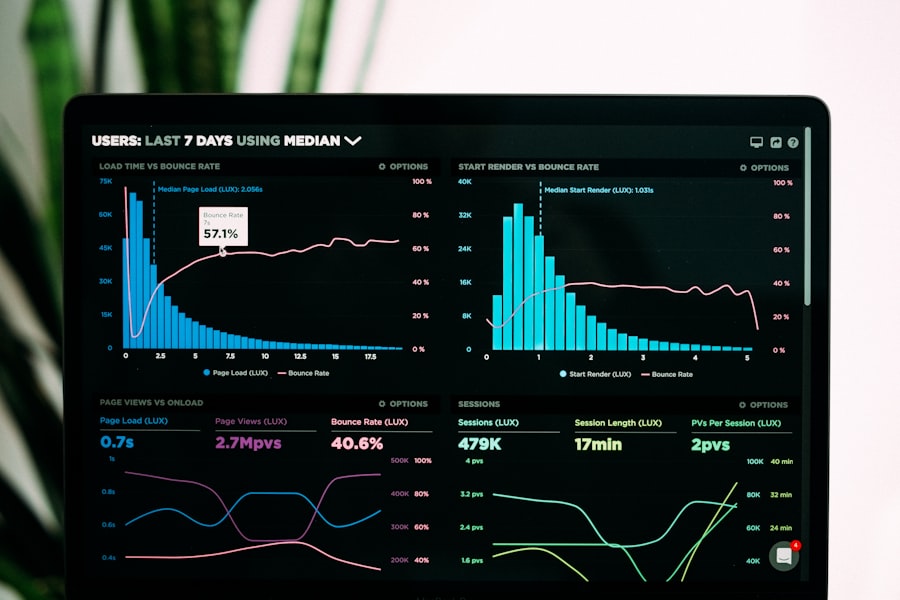
Recommendation engines that analyse browsing and purchase history now drive a meaningful share of revenue for top stores. AI-generated product descriptions and imagery speed up catalogue expansion, while predictive analytics help forecast demand and avoid both stockouts and overstock.
"Stores that personalise the shopping experience with AI-driven recommendations see measurably higher average order values than those using static merchandising."
Frequently Asked Questions
Conclusion
No single tactic turns a struggling store into a 7-figure one overnight. It's the accumulation of small, deliberate fixes — a smoother checkout, a recovered cart, a tested headline, a retained customer — that compounds into sustainable growth.
Start with the highest-friction points in your funnel, measure relentlessly, and treat optimisation as an ongoing practice rather than a one-time project. That discipline, more than any single growth hack, is what separates the stores that scale from the ones that stall.
Our team at Outdo System audits your store and builds a growth plan tailored to your numbers.