Every day, businesses pour thousands of dollars into Google Ads only to watch their budget disappear with little to show for it. The problem is rarely the platform itself — it's almost always a lack of optimization. Broad match keywords cast too wide a net, weak ad copy fails to qualify clicks, and landing pages bleed visitors before they ever convert.
The good news? A handful of deliberate adjustments can completely change the trajectory of a campaign. Optimizing for intent, Quality Score and conversion tracking doesn't just cut wasted spend — it compounds. Lower CPC means more clicks for the same budget, and a tighter funnel means more of those clicks turn into paying customers.
In this guide, we break down eight practical strategies our team uses to help clients lower cost-per-click, raise Quality Score and consistently grow conversions from their Google Ads campaigns.
Table of Contents
1. Focus on High-Intent Keywords
Not all traffic is created equal. A keyword like "digital marketing tips" might bring in volume, but it rarely brings in buyers. High-intent keywords — the ones people type right before they're ready to act — are where your budget should go first.
Look for transactional language: "buy", "hire", "near me", "pricing", "best [product] for [use case]". These searchers have already done their research and are evaluating options, which means a much shorter path to conversion.
- Use Google's Keyword Planner to filter for commercial and transactional intent.
- Group keywords tightly by intent so ad copy can speak directly to the searcher.
- Review your search terms report weekly to catch new high-intent queries early.
2. Improve Your Quality Score
Quality Score is Google's way of rewarding advertisers who give searchers a better experience. A higher score directly lowers your cost-per-click and improves your ad position — it's one of the highest-leverage metrics in the entire account.
Relevance
Keep keywords, ad copy and landing pages tightly aligned around a single, clear theme.
Click-Through Rate
Write ads that speak to the exact problem the searcher is trying to solve right now.
Landing Page Experience
Fast, mobile-friendly pages that match ad messaging keep Quality Score climbing.
3. Use Negative Keywords
Negative keywords are the unsung heroes of a profitable account. Every irrelevant click that gets filtered out is budget redirected toward someone who's actually likely to convert. Most advertisers under-invest here, and it shows up directly in inflated CPCs.
Job seekers, bargain hunters and DIY researchers are common culprits. If you sell premium services, excluding terms like "free", "cheap", "jobs", "salary" and "DIY" can meaningfully cut wasted spend within days.
- Build a master negative keyword list and apply it across every campaign.
- Mine your search terms report weekly for new irrelevant queries to exclude.
- Use phrase and exact match negatives to avoid accidentally blocking good traffic.
4. Optimize Landing Pages
You can build the perfect campaign and still lose the sale on the landing page. A slow, cluttered or generic page erodes the trust your ad just built, sending Quality Score down and bounce rate up.
Fast Loading Speed
Every extra second of load time measurably increases bounce rate and drains your Quality Score.
Mobile Responsive Design
The majority of Google Ads clicks now happen on mobile — your page has to work flawlessly there first.
Strong, Visible CTA Buttons
One clear action per page, repeated above and below the fold, removes any doubt about what to do next.
5. Use Smart Bidding Strategies
Google's machine-learning bid strategies can outperform manual bidding once a campaign has enough conversion data — they adjust bids in real time using signals no human could track manually.
Maximize Conversions
Spends your full budget to get the highest possible number of conversions automatically.
Target CPA
Sets bids to hit a specific cost-per-acquisition you define, ideal for predictable lead-gen budgets.
Target ROAS
Best for ecommerce — bids toward a target return on ad spend rather than a flat cost per click.
6. Take Advantage of Ad Extensions
Extensions make your ad physically larger and more useful on the results page — at no extra cost. More real estate typically means a higher CTR, which feeds directly back into a better Quality Score.
Call Extension
Adds a clickable phone number so mobile users can ring you directly from the ad.
Location Extension
Shows your address and a map pin — essential for any business that serves local customers.
Sitelinks
Surfaces extra pages like pricing or services, giving searchers more reasons to click through.
7. Run Continuous A/B Tests
The accounts that improve quarter over quarter are the ones that never stop testing. A/B testing removes guesswork and replaces it with data on exactly what your audience responds to.
- Headlines — test benefit-led vs. urgency-led messaging against each other.
- Descriptions — vary the proof points and offers to see what drives more clicks.
- CTA variations — "Get a Free Quote" vs. "Book a Call" can shift conversion rate significantly.
8. Set Up Accurate Conversion Tracking
None of the strategies above matter if you can't measure them. Without accurate conversion tracking, Smart Bidding has nothing to optimize toward and every decision becomes a guess.
Google Tag Manager
Centralizes every tracking tag in one place so conversions stay consistent across campaigns.
Form Submissions
Track every lead form completion so Smart Bidding learns from real, qualified leads.
Phone Calls
Call tracking captures the conversions that happen off-screen but close just as often.
Key Takeaways
- Reduce CPC by targeting high-intent keywords and trimming wasted clicks.
- Improve Quality Score through relevance, CTR and landing page experience.
- Increase CTR with ad extensions and continuous A/B testing.
- Generate better leads with tighter negative keyword lists.
- Improve ROI with Smart Bidding backed by accurate conversion tracking.
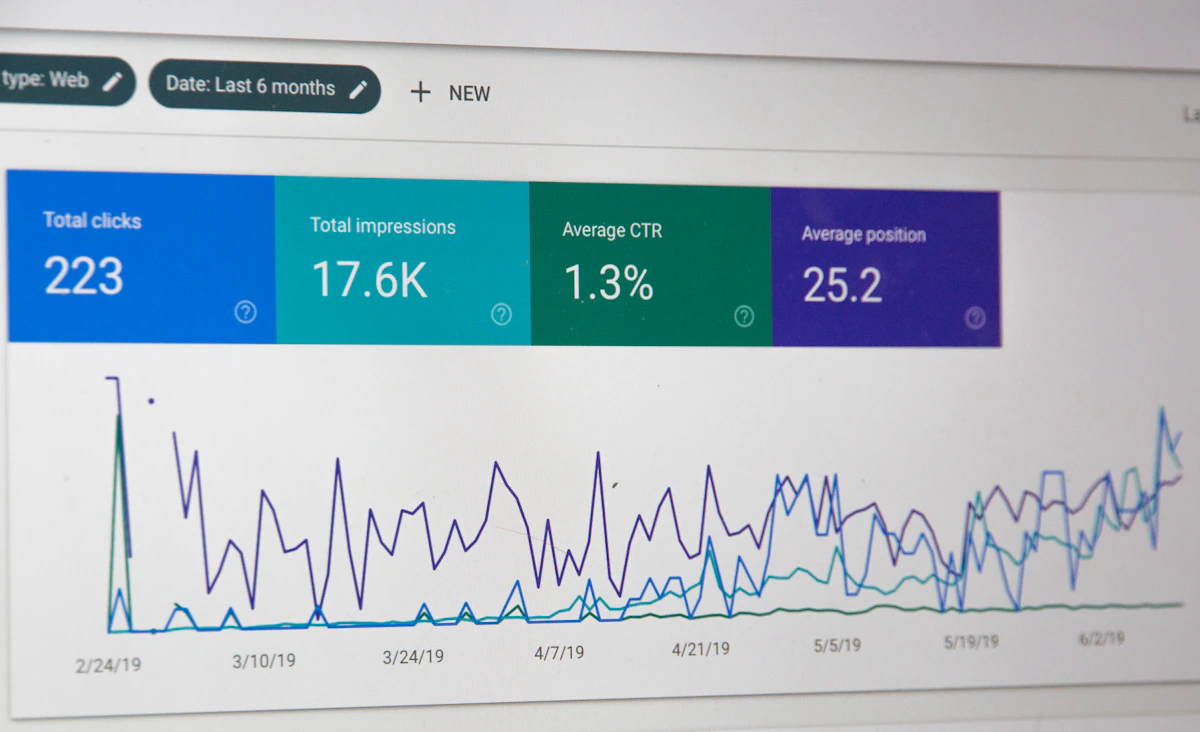
The Numbers Behind Optimization
“The best Google Ads campaigns aren't the ones spending the most money — they're the ones converting the most visitors.”
Related Articles
 SEO
SEO
SEO Tips for Small Businesses
Practical, no-fluff SEO moves that help small businesses start ranking without an enterprise budget.
Read More CRO
CRO
Landing Page Optimization Guide
A step-by-step breakdown of what separates a landing page that converts from one that doesn't.
Read More Strategy
PPC vs SEO: Which Is Better?
An honest comparison of paid and organic search, and how to decide where your next dollar should go.
Read More